


This was the face of Iain Duncan Smith on the announcement of the New Living Wage policy at Emergency budget…..
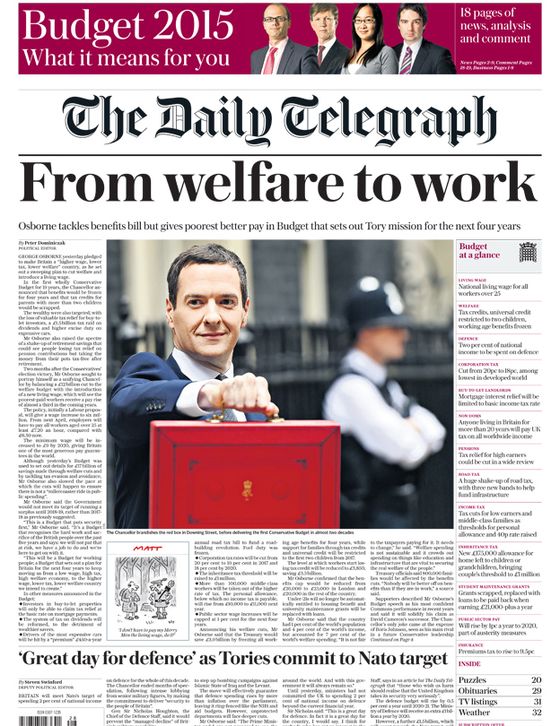

Clearly he seemed pretty pleased about it and as many mainstream papers agreed. But what is the truth behind the headlines?
Is the National Living wage the same as the Living Wage?
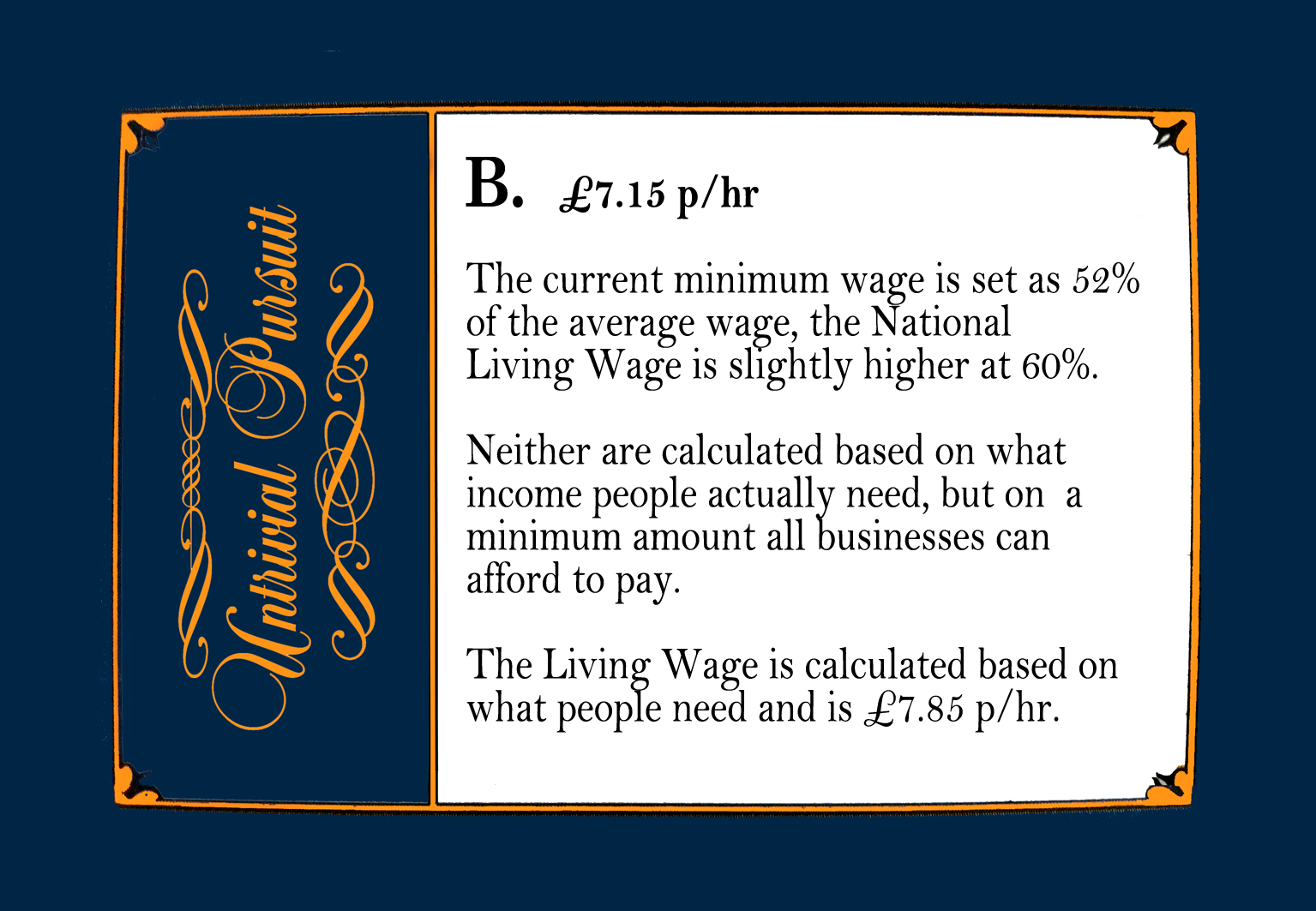
The Conservatives seem to have chosen to call what is essentially a new minimum wage the National Living Wage, making people and the media assume they are the same thing. But they are calculated in different ways and come out as different amounts – The Living Wage is £7.85/hr outside of London and £9.15 inside of London, whereas the National Living Wage is £7.20 and there is no enhanced London rate.
So how is the Living Wage calculated?
The living wage is calculated on behalf of the Living Wage foundation using information gathered by the Minimum Income Standard and is defined as the amount ‘households need to achieve a socially-acceptable living standard’.
It takes basic costs such as food, clothes, housing, transport, fuel, council tax and childcare into consideration but also includes broader necessities such as ‘having what you need in order to have the opportunities and choices necessary to participate in society’.
An important point that neither the media or Conservatives have explained is that “its calculation is predicated on full take-up of tax credits, housing benefit… If in-work support is cut then … the Living Wage will rise. For example, if we exclude in-work support then the level of the London Living Wage leaps from £9.15 to £11.65; 80 per cent higher than the current minimum wage” The Resolution Foundation.
It also assumes certain criteria e.g. that families will be living in low rent council properties, whereas the reality for many now (especially with the Right To Buy removing so much social housing) is living in expensive private rentals.
So, how is the National Living Wage calculated?
The current minimum wage, which is decided by the Low Pay Commission, currently stands at £6.50 p/hr. Although it is rising 20 pence in October to £6.70 p/hr . This is far below the £7.15 the government are setting out.
Minimum wage is currently calculated at 52% of median wages. The NLW is calculated as 60%. The government has asked the low pay commission to consider using the NLW as the minimum wage with the intention of raising it to £9/hr by 2020. Under 25s are exempt (inexplicably) and will continue to receive the minimum wage.
But its still a good thing, right?
Well, yes, of course having a higher minimum wage is a positive thing. It will raise the income of 2.5 million workers and reduce the government effectively subsidising private companies by using topping up people’s salaries. Osborne said “It can’t be right that we go on asking taxpayers to subsidise, through the tax credit system, the businesses who pay the lowest wages.” and I agree with him. Most people on minimum wage work for big companies with huge profit margins who can easily afford to pay a decent wage.
The problem comes with the notion that the higher NLW will compensate for tax credit reductions and benefit freezes. It is the carrot the conservatives are using as the compensate for the stick of brutal welfare reforms by saying they are moving the country from “a low wage, high tax, high welfare economy, to a higher wage, lower tax, lower welfare society”.
Osbourne claims that “taken together with all the welfare savings and the tax cuts in this Budget, it means that a typical family where someone is working full time on the minimum wage will be better off.” This is not true.
So what’s the cost?
Thirteen million families will be affected, with three million losing £1000 per year on average. Even taking into account higher wages, people will be “significantly worse off…There is simply not enough money going in to the New Minimum Wage to anywhere near compensate – in cash terms – people on tax credits” Paul Johnson IFS And very ironically, considering the Work not Welfare rhetoric of the Conservatives, the tax cuts will hit those who are on the lowest wages even more than those on benefits, making it even harder for people to transition from benefits to work.

 untrivialpursuit.com